DSP Power Amplifier Buying Guide: How to Select the Right 4-Channel DSP Amplifier
As professional audio systems become increasingly sophisticated, buyers are looking for more than just power output. Today's sound reinforcement projects require advanced DSP processing, efficient power management, flexible system tuning, and long-term operational reliability.
Whether you are a distributor, rental company, AV contractor, or system integrator, selecting the right DSP power amplifier can significantly improve project performance and customer satisfaction.
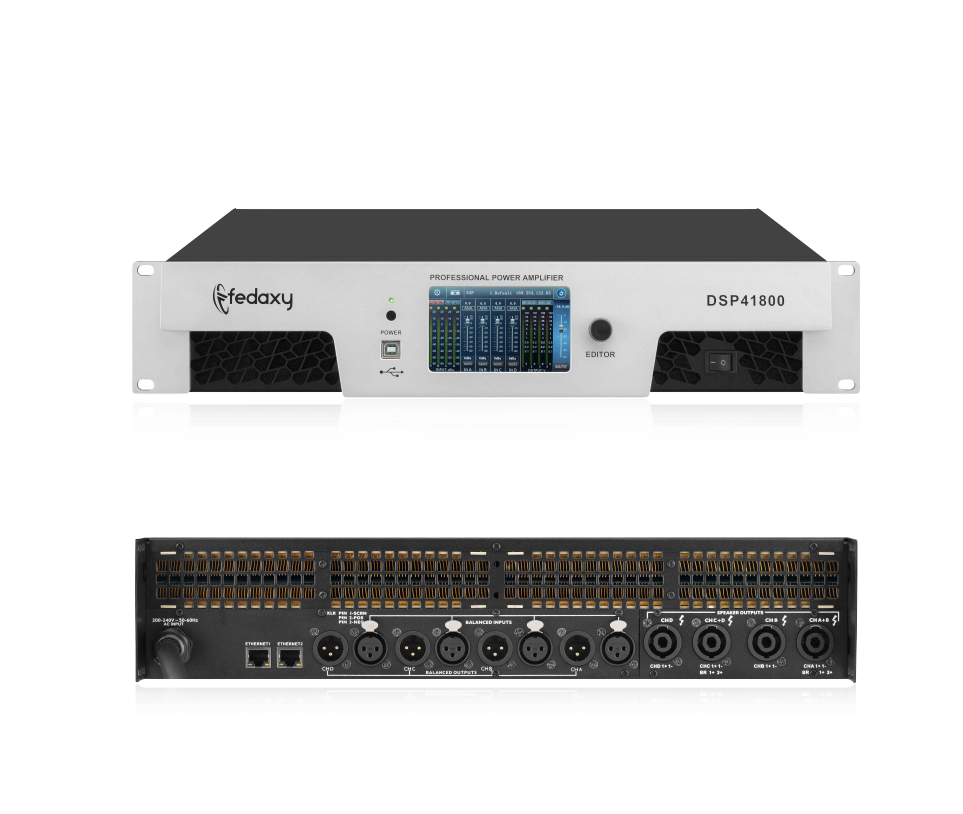
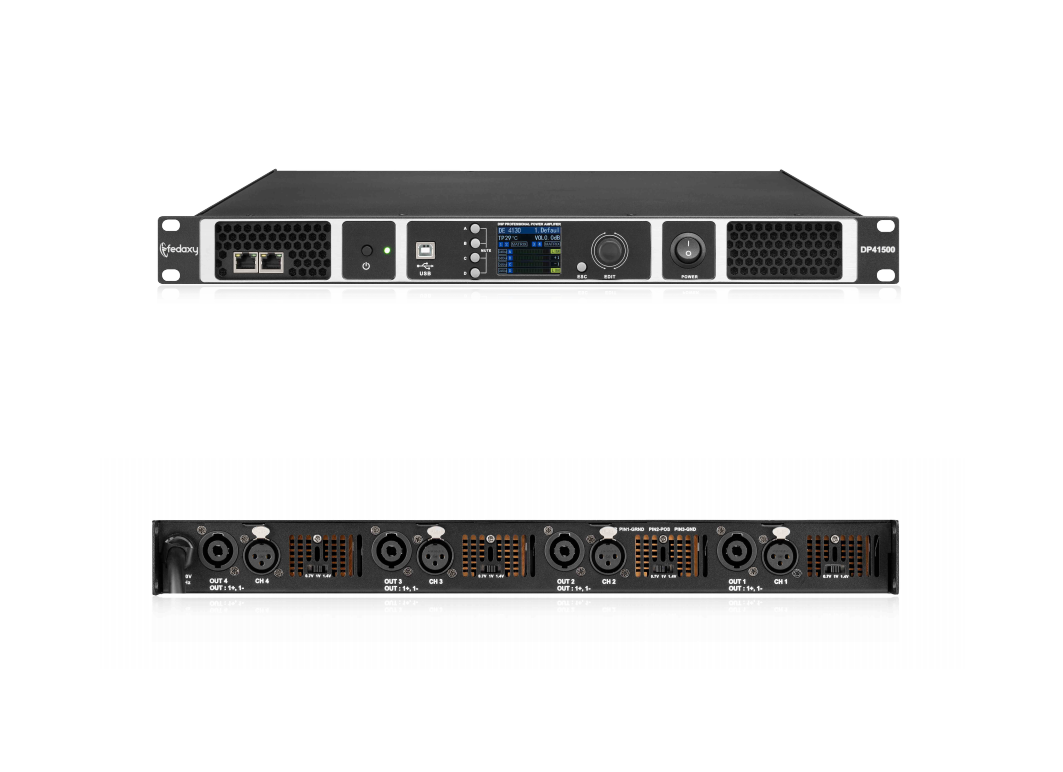
This guide explains the most important considerations when purchasing a 4-channel Class TD DSP power amplifier, using the DSP Series Class TD DSP Amplifier as a reference for modern professional audio applications.
Why DSP Power Amplifiers Are Becoming the Industry Standard
Traditional amplifiers provide power. DSP amplifiers provide power plus intelligent system management.
Integrated DSP technology allows audio professionals to:
- Optimize speaker performance
- Adjust system equalization
- Improve crossover management
- Enhance system protection
- Simplify installation and commissioning
- Reduce the need for external signal processors
For large-scale installations and touring applications, DSP amplifiers offer greater flexibility and improved system control.
Step 1: Match Amplifier Power to Your Application
The first consideration when sourcing a DSP amplifier is output power.
The DSP Series offers multiple power configurations:
| Model | 8Ω Stereo | 4Ω Stereo | 2Ω Stereo | 8Ω Bridge |
|---|---|---|---|---|
| DSP41000 | 4×1000W | 4×1700W | 4×2500W | 2×3000W |
| DSP41300 | 4×1300W | 4×2250W | 4×3250W | 2×3900W |
| DSP41500 | 4×1500W | 4×2650W | 4×3750W | 2×4500W |
| DSP41800 | 4×1800W | 4×3150W | 4×4500W | 2×5400W |
Selecting the appropriate power level ensures:
- Sufficient headroom
- Lower distortion
- Improved speaker protection
- Better dynamic performance
- Greater system reliability
For high-SPL applications such as concerts and touring systems, higher-output models provide additional flexibility and scalability.
Step 2: Evaluate DSP Processing Capabilities
One of the biggest advantages of DSP amplifiers is built-in signal processing.
When evaluating DSP amplifiers, buyers should consider:
Loudspeaker Management
Integrated DSP simplifies:
- System tuning
- Frequency optimization
- Driver alignment
- Loudspeaker protection
Installation Efficiency
Built-in DSP reduces:
- External equipment requirements
- Rack space usage
- Wiring complexity
- Installation costs
System Consistency
Pre-configured DSP settings allow multiple venues or projects to maintain consistent audio performance.
For system integrators managing large deployments, DSP functionality can significantly improve project efficiency.
Step 3: Examine Audio Performance Specifications
Technical performance remains a critical purchasing factor.
The DSP Series provides:
- Frequency Response: 20Hz–20kHz (±0.5dB)
- THD: <0.05%
- Signal-to-Noise Ratio: >110dB
- Damping Factor: >500
- Crosstalk: >35dB
- Slew Rate: 20V/μs
These specifications contribute to:
- High-definition sound reproduction
- Improved speaker control
- Cleaner vocal performance
- Better low-frequency response
- Reduced listening fatigue
For professional installations, these metrics directly influence perceived sound quality.
Step 4: Consider Amplifier Architecture
The DSP Series utilizes Class TD technology, combining efficiency and sound quality advantages.
Benefits include:
- Higher power conversion efficiency
- Reduced heat generation
- Lower operating costs
- Strong low-frequency performance
- Clear high and mid-frequency reproduction
Compared with older amplifier technologies, Class TD designs deliver more power in a smaller footprint while maintaining professional audio performance.
Step 5: Verify Component Quality and Reliability
For commercial projects, internal component quality directly impacts product lifespan.
The DSP Series incorporates:
- High-quality switching power supply design
- Professional-grade amplifier modules
- Industrial-grade PCB construction
- Premium heat dissipation architecture
The amplifier design emphasizes stability during long-term operation in demanding environments.
This is particularly important for:
- Rental companies
- Touring production providers
- Stadium installations
- Entertainment venues
Where equipment downtime can lead to significant operational losses.
Step 6: Evaluate Cooling Performance
Heat management is one of the most important factors affecting amplifier longevity.
The DSP Series features:
- Four intelligent cooling fans
- Front-to-back airflow design
- Optimized heat sink architecture
- Efficient thermal management system
Benefits include:
- Stable performance under heavy loads
- Reduced thermal stress
- Improved reliability
- Longer service life
For continuous-use environments such as cinemas and KTV installations, effective cooling is essential.
Step 7: Assess Protection Features
Professional amplifiers should protect both themselves and connected loudspeakers.
The DSP Series integrates multiple protection systems:
- Power-on soft start
- Overheating protection
- Short-circuit protection
- Overcurrent protection
- Output DC protection
These protections help:
- Prevent equipment failure
- Reduce maintenance costs
- Protect speaker investments
- Improve operational reliability
Comprehensive protection is especially important for rental fleets and high-utilization installations.
Step 8: Consider Venue Type and Application
Different venues require different amplifier characteristics.
Touring Performance Systems
Recommended priorities:
- High output power
- DSP management
- Compact rack design
- Reliable cooling
KTV and Entertainment Venues
Recommended priorities:
- Stable operation
- Clear vocal reproduction
- Efficient power consumption
Concert Sound Reinforcement
Recommended priorities:
- High dynamic headroom
- DSP optimization
- Advanced protection systems
Cinema Applications
Recommended priorities:
- Low distortion
- Accurate frequency response
- Reliable continuous operation
The DSP Series is designed to meet the requirements of all these professional applications.
Why OEM Buyers Choose Fedaxy Audio
When sourcing professional amplifiers, product quality is only part of the equation.
Fedaxy Audio offers:
- Over 10 years of manufacturing experience
- ISO 9001 quality management system
- CE, RoHS, and CB certifications
- OEM and ODM customization services
- Global export experience across 100+ countries
- Professional engineering and technical support
These capabilities help distributors and system integrators build competitive product portfolios while reducing sourcing risks.
Common DSP Amplifier Procurement Mistakes
Focusing Only on Wattage
Higher wattage does not automatically guarantee better system performance.
Ignoring DSP Functionality
Limited DSP capabilities can increase installation complexity and project costs.
Underestimating Cooling Requirements
Insufficient cooling can shorten amplifier lifespan and reduce reliability.
Choosing Suppliers Without Technical Support
Long-term project success often depends on responsive manufacturer support and customization capabilities.
Conclusion
A professional DSP power amplifier should provide more than power. It should deliver intelligent system management, exceptional sound quality, long-term reliability, and installation flexibility.
The DSP Series Class TD DSP 4-Channel Amplifier combines high-power output, advanced DSP processing, efficient cooling, and comprehensive protection systems, making it an ideal choice for touring productions, KTV installations, concert venues, cinemas, and large-scale professional audio projects.
For distributors, system integrators, and OEM buyers, investing in the right DSP amplifier can improve project performance, reduce operational costs, and create lasting value for end users.